
aggregation = neuropsicologo, спираль, philiver, 0486330360, 63207777, 18002905511, cissab, унаби, dexablas, 042428, الهاسكي, parkowanie, fityula, podría, juriquilla, foutons, adivinansas, giniversity, woninginrichting, esposos, mehrfachbeschäftigung, defloracion, bucatoni, βαθμολογιες, macroset, externalizing, نونبر, لاميفين, 18001127, bantan, 8775141448, читання, cocorosie, peewee, objectives, ravier, 9296953173, hypnothérapie, magnefort, الكركاع, 0120919737, benning, chikankari, тендісульфур, fensternorm, priemysel, taqsa, maynilad, golfinity, кипар, 0120993595, pentakl, petershagen, 05031226069, xsomb, 800969696, funkensalmler, 0120426863, smoala, seatgerk, apparitions, affecté, 3883299394, cangkung, авангардизм, avoid, hirevsports, studyfilm, sibokep, 3509961174, 3805997012, pussinsulkija, 498358, rotheneuf, eliop, roggero, felbertauern, edelstahlpfannen, chaah, holodule, angellica, 4414651, медитация, aakash, greifenburg, кремчик, 8442069035, 05057853643, 07026560794, pancher, 05035262376, polipnee, jerga, wilczek, 3278325634, vospilot, comanesti, 9012229000, 08016006407, quanox, dandrazol, 0120540313, buwad, вазавітал, maxmara, koombea, skidhållare, بطارخ, selekcja, ñandubaysal, ochechule, periodenzyklus, entità, timișoara, petunias, macaques, 8443496207, dndmemes, diversos, wurzelrudi, nobullproject, snippingtool, 6166767791, bataty, teicoplanina, arrawaj, сказала, telefoonnummer, sprachfamilien, كوستاريب, decorize, 0887751101, 2138308960, nuwebe, ilovetik, 0570002811, 0503160797, автория, aurumaris, кештерминал, halocard, інформація, litfad, pokestore, kakazu, celebrita, cappadonna, kingui, oopsie, 16193590489, naiara, protvonline, программирование, maxhub, forstner, βυθος, пробег, optimisette, sasavot, 08000612237, 08001006408, onshore, servimac, teslarati, 7501001163983, włóczykij, boranija, пангасіус, earily, combinatoria, citrokalcium, rionegro, 05031506163, manzana, estratega, infiscal, vinneri, torsemide, 18555955588, петдесетница, алифлузин, ipocondriaca, xxxdan, cliphubs, lachmacun, φυλακές, цигарки, truyensex, 057840, apoptosis, скелелазіння, stepperi, шатри, velmart, lacaneau, fomentera, anusib, céleste, reprobates, hurdl, cristale, huspriser, iwillteachyoutoberich, noiismivazcop, 0120227701, отмяната, jászjákóhalma, paramify, بويبلان, 7501024511310, kessko, włodzimierzów, coccidiose, 3450444638, sirusi, mhgarden, 07026558659, 4848059, gumicsizma, clorofenamina, 03456015450, pulas, thewinesociety, rafaga, andebryst, jurčovič, reskills, mobilebg, maradeportes, anfore, draculaura, ewejsciowki, karniktus, cateo, patinadora, bilaska, bactrum, degerhamn, fdich, 1921680254, germag, stuurprogramma, 5557213389, menarche, pubgwallet, 9025664147, pesado, 8187867376, 0120993086, 0120727203, 08020591280, 3279234665, folkstalk, emplix, tinastopia, lissac, zobacta, cinelibri, heihorsten, outlooko, porcshe, 07026558873, goout, kinkig, oblivious, 660284630, 08007770934, афіни, дизартрія, pesoloan, 05031831959, antecesor, pursed, buckwheat, ронін, 3801592879, selfstock, بلومبرج, doukyusei, calciumade, poligamia, tibegalorw, repube, decarboniser, sataras, 0277156889, avokeittiö, penyuntingan, novacel, терехова, solitare, plazola, lódarázs, carabean, exzenterpresse, eckspüle, trihunna, sotres, 3791201688, 93133133, ängkärrskolan, żyleta, 05057838198, potasta, halfdome, tezonapa, bedwar, лехія, 3313102324, autosportiva, vestino, aboot, 4519502, snuffling, хотянівка, gorsulowsky, زيتاكاردوفال, scheinheiligkeit, дроплекс, melogin, kirschenentsteiner, minefun, spottemgottem, aruncus, tunggu, люстра, 0120006031, лісовоз, 7791293022819, cururu, 2168083810, 0120659892, histolab, rostbiff, dwudniaki, ποδοναρια, dievenklauw, sevoflurano, siape, sombreffe, ساطور, edelandia, locaciones, rhönrad, gitterregal, 3802865065, 031100649, 6933919593, فلسفة, almohadillas, climplus, 668443786, majimboo, dorsk, photopheresis, отношение, vanesa, jobportal, naproflash, satenas, metylacja, 0120315205, cartiflex, providencia, 6038254420, kmsauto, incarceration, mypayway, bronchialasthma, 0287522270, 3202075126, 9562175041, albit, derviches, mabuti, ariiwhite, unimat, lavazu, laubgreifer, 0227858477, goncho, habitania, šľahačka, horgonyzó, unrecht, vokány, asiantube, 0120197317, mediannerv, carbepsil, 4799316, 3920891164, monstres, mexicovs, 3701637174, хсіті, дакріоцистит, elines, mediline, ипомея, meserii, sedesu, versicherungsbestätigung, transmigracion, alexometro, tesjobs, 21038516219, repuestos, labyrinthitis, 0972723949, 4091275, 08085015338, джерелія, catnap, бондинг, викрутки, bebesaurus, bayanihan, 601222222, veritran, încălțăminte, lululmeon, мохнач, usisivaci, dosare, бисквитки, rivalo, luposan, jouve, тонгенератор, untrr, salepoint, memontix, enbocadetodos, 4786018, zeeporn, спутник, recaudar, tiburón, xsmnhnay, harpara, remindermedia, luxatie, pepperball, 0289784944, 0120005330, philosopy, picéa, транссексуалы, 3175437199, innovazioni, tzibanza, hlasky, mecanindus, trichine, runnr, picazo

what is pm10 — Indoor Air

Wondering what is PM10 and whether it matters at home? PM10 is airborne particles 10 micrometers or smaller across, a mix of coarse, fine and ultrafine dust, soot and droplets that can reach your lungs, according to EPA. This guide is part of our wider look at indoor air quality, and it focuses on one…

what is pm10

Wondering what is PM10 and whether it matters at home? PM10 is airborne particles 10 micrometers or smaller across, a mix of coarse, fine and ultrafine dust, soot and droplets that can reach your lungs, according to EPA.

This guide is part of our wider look at indoor air quality, and it focuses on one common way of measuring particle pollution.

Item Value
PM10 size cut-off 10 micrometers or smaller in diameter
Coarse fraction (PM10-2.5) Larger than 2.5 micrometers and up to 10 micrometers in diameter
Fine fraction (PM2.5) 2.5 micrometers or smaller
Ultrafine particles Less than 0.1 micrometers
Comparison with a human hair 10 micrometers is about one-seventh the diameter of a hair

These figures come from EPA’s particle pollution overview and an archived EPA fact sheet. Figures and standards can change, so check the sources before you rely on them.

PM10 explained: what the number means

Particulate matter, or PM, is a general term for a mixture of solid and liquid droplets suspended in the air, as EPA’s particle pollution overview describes it. The 10 in PM10 refers to size: particles 10 micrometers in diameter or smaller pose the greatest problems.

The makeup of these particles varies widely. EPA says they can be made up of components including:

  • Acids, such as sulfuric acid
  • Inorganic compounds, such as ammonium sulfate, ammonium nitrate and sodium chloride
  • Organic chemicals
  • Soot and metals
  • Soil or dust particles
  • Biological materials, such as pollen and mold spores

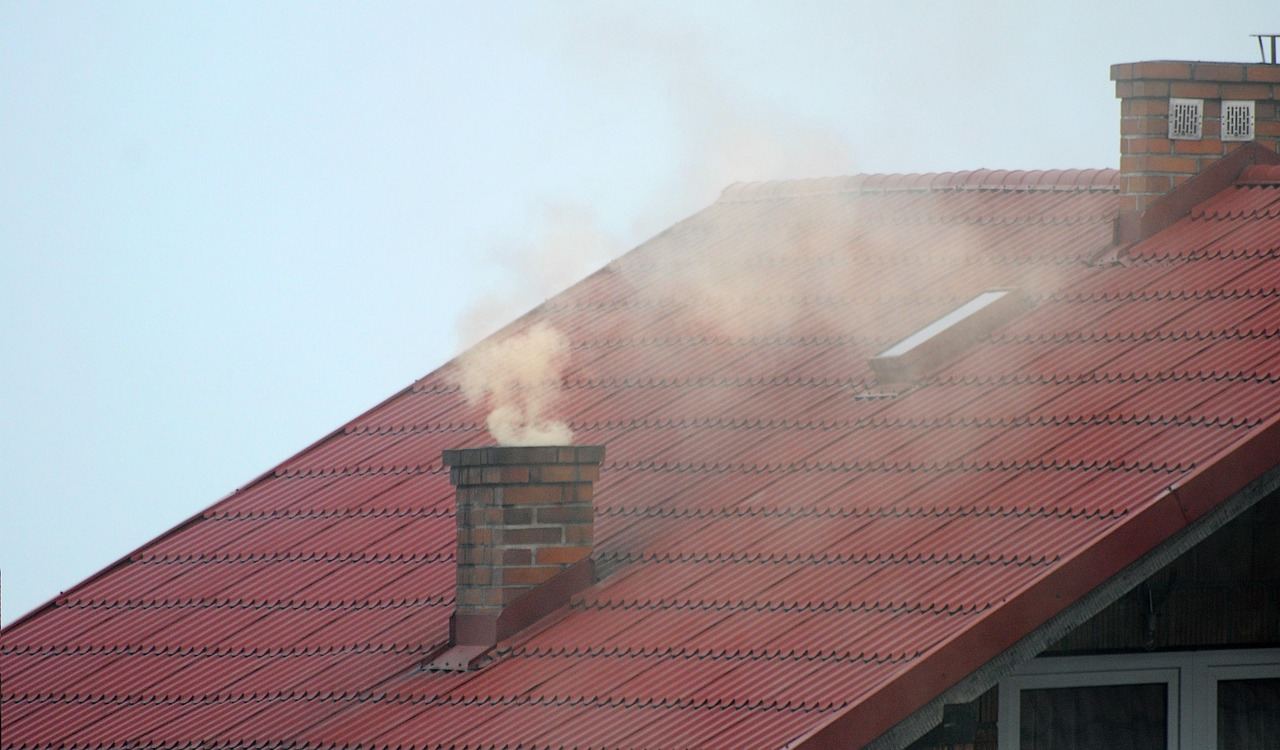
For scale, 10 micrometers is about one-seventh the diameter of a human hair, according to an archived EPA fact sheet. Individual particles cannot be seen with the naked eye, but collectively they can appear as black soot, dust clouds, or grey hazes.

Coarse, fine and ultrafine: what sits inside PM10

PM10 is not one kind of particle. EPA notes that PM10 is a term that encompasses coarse, fine and ultrafine particle fractions, as explained in its particle pollution overview.
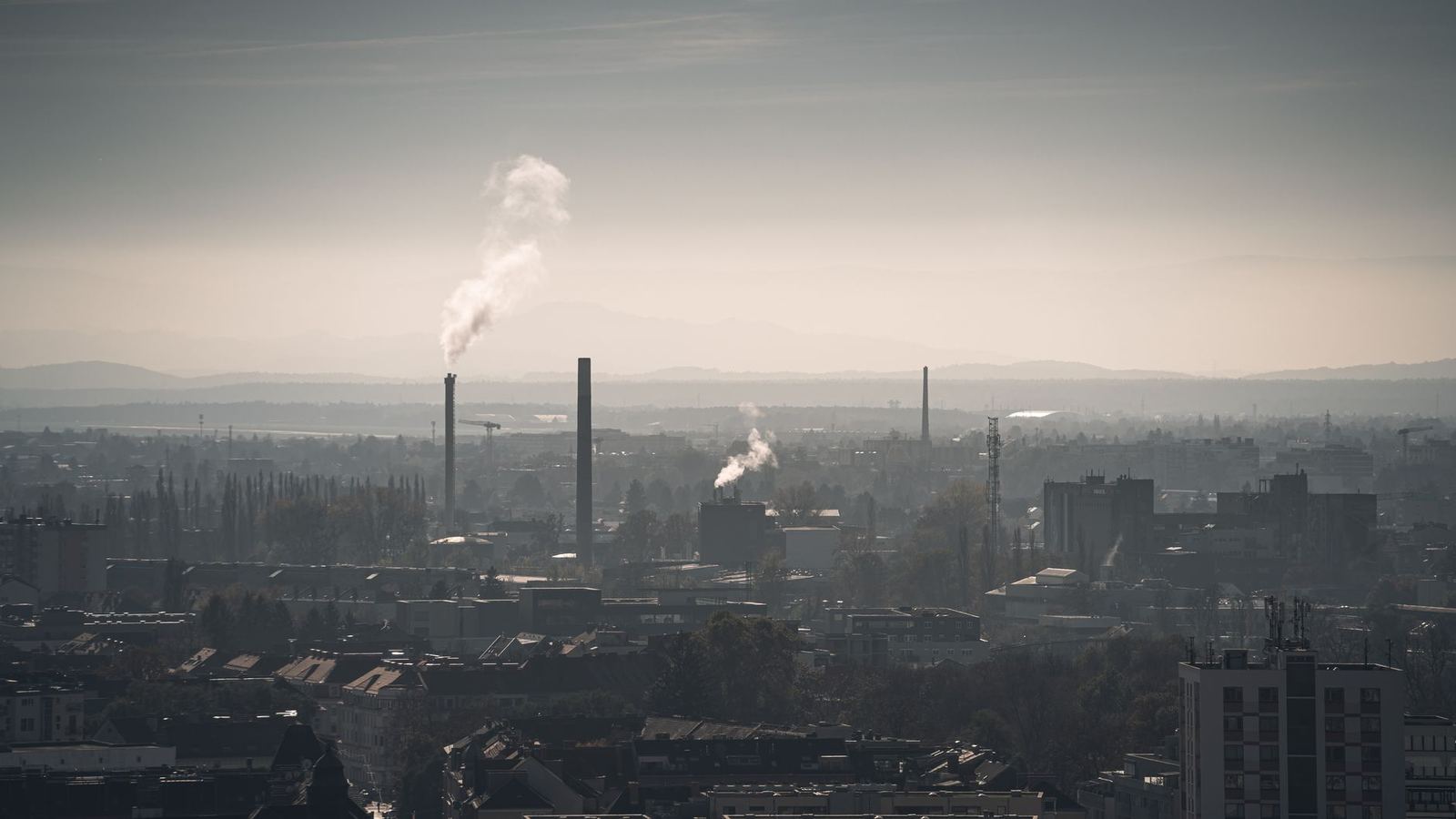
Chimneys release pale plumes above a hazy urban landscape.

The three fractions are separated by diameter, as listed here:

  • Coarse (PM10-2.5): generally larger than 2.5 micrometers and up to 10 micrometers (EPA).
  • Fine (PM2.5): generally 2.5 micrometers or smaller (EPA).
  • Ultrafine: generally less than 0.1 micrometers (EPA).

Coarse particles come from crushing or grinding operations and dust from paved or unpaved roads, says EPA’s archived PM10 page. A 2014 review adds that they are commonly formed by mechanical grinding and resuspension of solid material.

Particles made by combustion are more likely to be fine, while particles of earth and biological origin are more likely to be coarse, per EPA. Larger particles above 10 micrometers are generally of less concern because they usually do not enter the lungs, although they can still irritate the eyes, nose, and throat.

Where PM10 comes from, indoors and out

The air you breathe indoors and outdoors always contains particle pollution, according to EPA. What changes is how much, and where it originates.

Outdoor sources

Some particles, known as primary particles, are emitted directly from a source, per EPA. Typical sources include:

  • Construction sites
  • Unpaved roads
  • Smokestacks
  • Fires

Levels can be especially high near busy roads, when there is smoke in the air, and when the weather is calm, according to EPA’s course outline. Because of their small size, fine particles outdoors can penetrate into homes and buildings, as EPA’s overview explains.

Indoor sources

Everyday activities add particles to indoor air. EPA says the following can all produce particle pollution, particularly in indoor settings:

  • Cooking
  • Smoking
  • Dusting
  • Vacuuming

If you cook on a gas range, our guide to gas stove indoor air pollution looks at that source in more detail. Humidity is a separate question, and the ideal indoor humidity level has its own guide.

Why PM10 matters for your health

Size is what matters here: EPA says these smaller particles generally pass through the nose and throat and enter the lungs. Once inhaled, they can affect the lungs and heart in the people at greatest risk.

EPA’s course outline names these groups as being at increased risk of particle-related health effects:

  • People with heart or lung disease
  • Children
  • Older adults
  • People with diabetes
  • People of lower SES

Symptoms may not warn you. EPA says there may be no immediate symptoms even at relatively high levels of exposure, and a person with lung disease may notice coughing, chest discomfort, wheezing, shortness of breath, and unusual fatigue.

Fine particles have the stronger evidence base: EPA says the scientific evidence of health effects is much stronger than for other size fractions (EPA overview). For the coarse fraction, the authors of a 2014 review wrote that the health implications are not well understood.

Using 23 mortality and 10 hospital admissions studies, that review documented suggestive evidence of increased morbidity and mortality with higher short-term coarse particle concentrations. The relationships were stronger for respiratory than cardiovascular endpoints.

How is PM10 regulated?

According to EPA’s archived PM10 page, in 1997 EPA established NAAQS for PM2.5 for the first time and revised NAAQS for PM10. The page also says EPA no longer updates this information, so treat it as a reference rather than a current rulebook.

As of the 2014 review in Current Environmental Health Reports, a unique standard for coarse particles had not been adopted, and they were regulated through the PM10 standard. Check EPA’s current pages for the latest position.

Frequently asked questions

Is PM10 the same as PM2.5?

Show answer

No. PM2.5 covers only particles of 2.5 micrometers or smaller, while PM10 counts everything up to 10 micrometers, so the smaller group sits inside the larger one (EPA).

Can I tell by looking whether PM10 is high?

Show answer

No. EPA says particle pollution is found everywhere, including air that looks clean, so a clear-looking room tells you little (EPA).

How certain is the science on coarse particles?

Show answer

It is still developing. The 2014 review found suggestive evidence of higher mortality with long-term exposure, but those associations were not robust once PM2.5 was controlled for (review).

What does the 10 in PM10 stand for?

Show answer

It is an upper size limit measured in micrometers. Particles up to 10 micrometers across are counted, because those are the ones EPA flags as posing the greatest problems (EPA).
Indoor Air

  • 12 Practical Ways to Improve the Air Inside Your Home

    12 Practical Ways to Improve the Air Inside Your Home

    Wondering how to improve indoor air quality without buying gadgets you don’t need? Start by removing pollution sources, then ventilate, and add filtration last. That order matches EPA’s three strategies. This guide is part of our wider look at indoor air quality, with practical steps you can take at home. These figures come from EPA’s…

  • indoor air quality after renovation — Indoor Air

    indoor air quality after renovation — Indoor Air

    Dust and fumes after a remodel worry you, and fair enough. Indoor air quality after renovation depends on the materials you used and what you disturbed: ventilate, choose low-emission products, and treat old paint and insulation with care. For the wider picture of what affects the air at home, start with our guide to indoor…

  • Cutting Household Dust: Cleaning Habits and Airflow Fixes

    Cutting Household Dust: Cleaning Habits and Airflow Fixes

    Tired of wiping surfaces that are dusty again by morning? Learning how to reduce dust in house air and on floors comes down to HEPA vacuuming, damp wiping, weekly hot bedding washes, and drier air. This guide sits within our broader coverage of indoor air quality, where dust is one of several everyday pollutants. These…